With Thanksgiving and Black Friday rapidly approaching, I’d like to take a moment to pass along to you this paragraph from a companywide email alert I just sent:
Reminder: With the upcoming holiday and online shopping, information security is of paramount importance. Recently, there has been an increase in sophisticated phone call scams and, in some cases, the caller ID may be a number you recognize or the caller’s voice may even sound like someone you know. Please be vigilant and remember to stop and think before clicking links or taking any unusual actions in response to unexpected messages or phone calls. Remember not to provide one-time passcodes received through SMS to anyone.
Please consider taking this advice to heart and passing it along to those you care about.
If you have cryptocurrency in a crypto wallet and the “seed phrase” for that wallet was stored in your LastPass vault in November of 2022, your cryptocurrency is at serious risk.
Strong evidence suggests that, of the 25 million vaults obtained in last year’s LastPass breach, many of the ones that held crypto wallet “seed phrases” have been cracked and the contents of those wallets have been stolen.
To protect your cryptocurrency, you will need to ensure that it is not in a wallet whose “seed phrase” was exposed in the November breach.
To be clear, the LastPass vaults were stolen and are being cracked offline. This means that even if you changed things in your vault after the breach, it doesn’t make any difference because the cyber criminals are working with a copy of the vault from November of 2022.
If you had a LastPass vault in November of 2022 and you haven’t yet changed your compromised passwords, you should at least change your email account password today. If someone compromises your email account, they can get into nearly any of your other accounts simply by using the “Forgot password” link and having a password reset link emailed to them.
The attackers went after cryptocurrency first. When that dries up, they may start going after other sources of money such as bank, investment, and retirement accounts. Protect yourself before it’s too late.
You can read more about this in Brian Krebs’ blog post here.
For years, I have been using Picasa 3 by Google to import photos and videos uploaded from my phone and organize them into folders by date. But, Google stopped supporting that program years ago, leaving me in need of a better solution. So, this past weekend I wrote a Windows PowerShell script to do it.
Though it was intended for photos and videos, you can use it for organizing any files you like. The script is called Organize-FilesByDate, it’s currently (as of v0.8) about 265 lines of code, and it comes with a config file template that you can modify to suit your needs. You can download both files here.
The US Congress, at the behest of Mark Zuckerberg’s Meta (parent company of Facebook and Instagram) and under the guise of protecting Americans from China, is taking aim at rights guaranteed to us by the First Amendment.
Congress shall make no law respecting an establishment of religion, or prohibiting the free exercise thereof; or abridging the freedom of speech, or of the press; or the right of the people peaceably to assemble, and to petition the Government for a redress of grievances.
First Amendment to the Constitution
For 150 million Americans (nearly half the population), TikTok is a place where we can express ourselves, get news that doesn’t receive much coverage on mainstream media outlets, and connect with a community of people who share our interests. The popularity of TikTok exploded during the pandemic when Americans were forced to be physically isolated from each other. If TikTok were banned, it would be a significant blow to millions of us.
Sen. Mark Warner (D-VA) sponsored S. 686, known as the RESTRICT Act, to ostensibly ban TikTok. But it’s not just about TikTok. The RESTRICT Act, which the ACLU has raised concerns about, would allow the administration to ban other technologies as well, without the American people having any knowledge or recourse.
The bill also imposes severe penalties for violations: Up to $250,000 for civil and up to $1,000,000 or 20 years in prison for criminal. If the bill were signed into law and used to ban TikTok, you could be subject to such penalties simply for opening the app.
The RESTRICT Act is overreaching and a clear threat to the Internet as we know it. To stop it from becoming law, we’re going to have to take action. The best thing you can do is call your Senators (find out who they are here) and tell their staffers in a polite yet firm manner that you strongly oppose this legislation and that, if they vote for it, you will spend all of your free time fundraising for their opponent in the next primary election. Your Senators’ offices can be reached by calling the United States Capitol switchboard at (202) 224-3121.
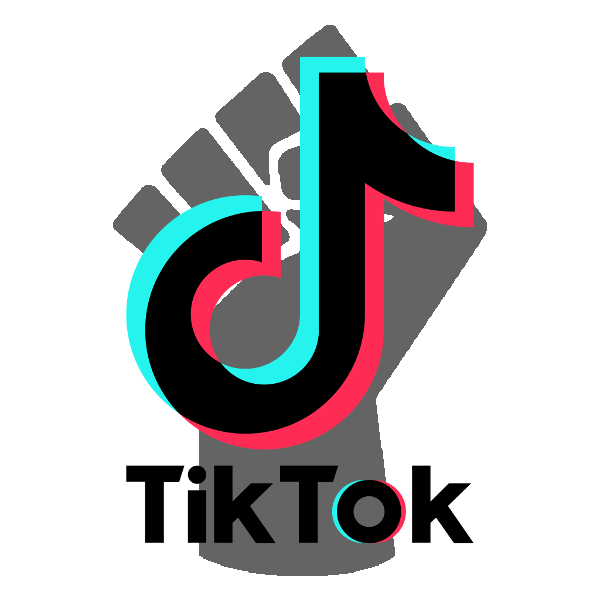
“Solidarity with TikTok” logo by Rob Woodruff. You are free to use this image as your profile picture on social media platforms (e.g.: Facebook, Instagram, and Twitter).
I’ve put together a live document that provides a list of recommendations to help you protect the confidentiality, integrity, and availability of your digital information.
I’ve put together a live document that provides a list of recommendations to help you protect the confidentiality, integrity, and availability of your digital information.
The document is intended to be reviewed annually. Think of it like spring cleaning for your digital data.
I encourage you to bookmark it and share it with anyone you think it could benefit.

 Rob's Little Corner of the Internet